Verb
verb, a word that conveys action, occurrence, or state of being. It is one of eight parts of speech in English grammar.
Overview and examples
The primary function of a verb in a sentence is to provide information about the subject’s activity or state of being beyond the information inherent in the subject itself.
“Doing” verbs, like run, wash, and form specify activity. Activity can be either an action (activity undertaken through motion) or an occurrence (activity that indicates a change in state).
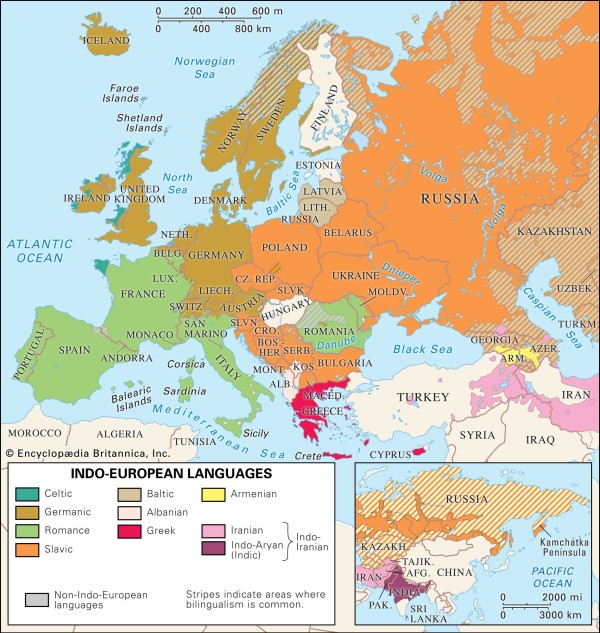 More From BritannicaIndo-European languages: Verbal inflection
 Oliver washed the windows.
Mildew forms in humid environments.
“Being” verbs, like am, is, are, was, and were, specify state of being rather than activity. “Having” verbs, like have, has, and had, may also specify state of being—namely, in relation to possession. Both being verbs and having verbs are considered linking verbs, because they link one piece of information to another.
We are at the store.
The store has all sorts of food.
Tense, aspect, and mood
In most languages, verbs are marked in some way for the following three categories:
Tense, which reflects the time frame in which an event takes place, such as past (He ate), present (He eats), or future (He will eat).
Aspect, which reflects the duration of an event, such as continuous (He is eating) or perfect (He has eaten).
Mood, which reflects the speaker’s sense of hope or certainty in an event’s existence, such as imperative (Eat!) or subjunctive (May he eat).
Tense, aspect, and mood are expressed through verb conjugation (inflection) in some languages, like Spanish or French. Other languages, like Mandarin Chinese, express tense, aspect, and mood through the use of modifiers, such as particles.
The trusted destination for professionals, college students, and lifelong learners.
SUBSCRIBE



In English, tense, aspect, and mood are expressed through a combination of inflection and modifying expressions. The past tense is inflected by the addition of -d or -ed in weak verbs (wash→washed) or a change in stem in strong verbs (swim→swam). But the future tense is formed by using a supporting verb, will (wash→will wash; swim→will swim). Such supporting verbs, often called auxiliary verbs, are void of lexical meaning in their own right and carry grammatical meaning only when used in combination with another verb (whether stated explicitly or understood).
网址:Verb https://m.klqsh.com/news/view/352668
相关内容
VERB Definition & MeaningVerb: Definition, Types, Forms and Examples
Mastering 'Get Around': The Ultimate Guide to This Phrasal Verb
100 Examples of sentences containing the verb “get around”
What Are Verbs? (With Examples)
What is another word for creating?
Affect vs. Effect: Use The Correct Word Every Time
Affect vs. Effect: Clear Up the Confusion! • 7ESL
Grammar: The Difference between Effect vs. Affect
Comprueba la traducción para 'query' en el diccionario de Nglish
随便看看
最新乐趣
- 佟大为唱少年壮志不言愁怀念刘欢
- 任贤齐 春天花会开 岳云鹏 任贤齐:我只是低调而已
- 谁用贾政名义骗宝玉出门?薛蟠可没这个脑,还得“命小福薄”的宝姑娘
- 时宜爱慕周生辰 如今却要奉旨成婚,心里不是滋味
- 刘欢妻子辟谣刘欢临终传闻:有关老刘临终传闻和后事图片全是造谣
- 太抽象了,两个王楚钦打上pk了
- 马凡丁谈与谭松韵刘学义合作,赞其细节指导与幽默
- 永远不要跟罪犯共情
- 武则天:当武则天第一次见男宠张昌宗,刘晓庆那神情绝了!
- 金鹰奖女明星路透来了!统一穿黑白配色,杨紫宋佳秦海璐都穿白色
热点乐趣
- 89593
- 77847
- 64158
- 60142
- 39754
- 35536
- 32255
- 22661
- 22435
- 21391